From Prompt to Gallery: The Process of an AI Artist
People think AI art is instant. It's not. For my latest exhibition, I generated over 5,000 images to find the 10 that I actually wanted to show. The process is iterative, exhausting, and deeply personal. It is a highly deliberate journey that spans both the digital and physical realms, requiring a new kind of craftsmanship that is still being defined.
It begins with a concept, a feeling, or a specific visual idea. I spend hours sketching and writing notes, trying to define the parameters of what I want to create. I don't just rely on the AI to come up with ideas; I use it to realize my own. Then, I turn to the algorithm. The initial prompt is just the starting point. I might spend days refining the wording, adjusting style weights, and exploring different models. I use negative prompts extensively to remove unwanted artifacts and guide the AI away from generic interpretations. This is the exploration phase, where I am mapping the latent space of the AI to find the core of my vision. It is like digging for gold in a mountain of data.
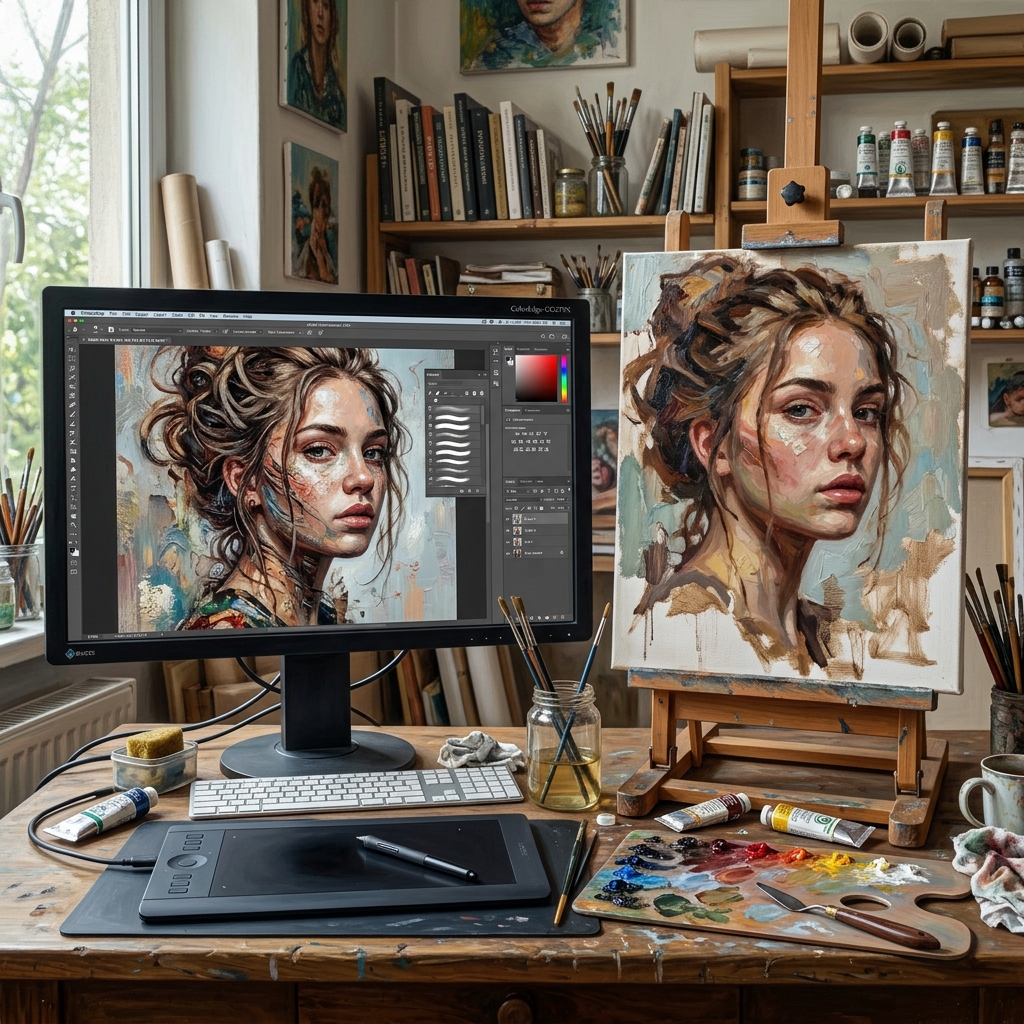
Once I have a set of generated images that capture the essence of the idea, the real work begins. I don't just take the raw output and call it finished. That would be lazy and, frankly, boring. I bring the images into digital painting software like Photoshop or Corel Painter, where I cut, paste, blend, and repaint elements. I use the AI outputs as raw material—as textures, as compositional elements, or as inspiration for new forms. I might composite parts of ten or twenty different generations into a single image, correcting anatomical errors, adjusting lighting, and adding details by hand with a stylus. This is where the 'human touch' is most active, shaping the synthetic material into a cohesive artistic statement. It requires a deep understanding of traditional painting principles like composition, color theory, and lighting to make these composites work.
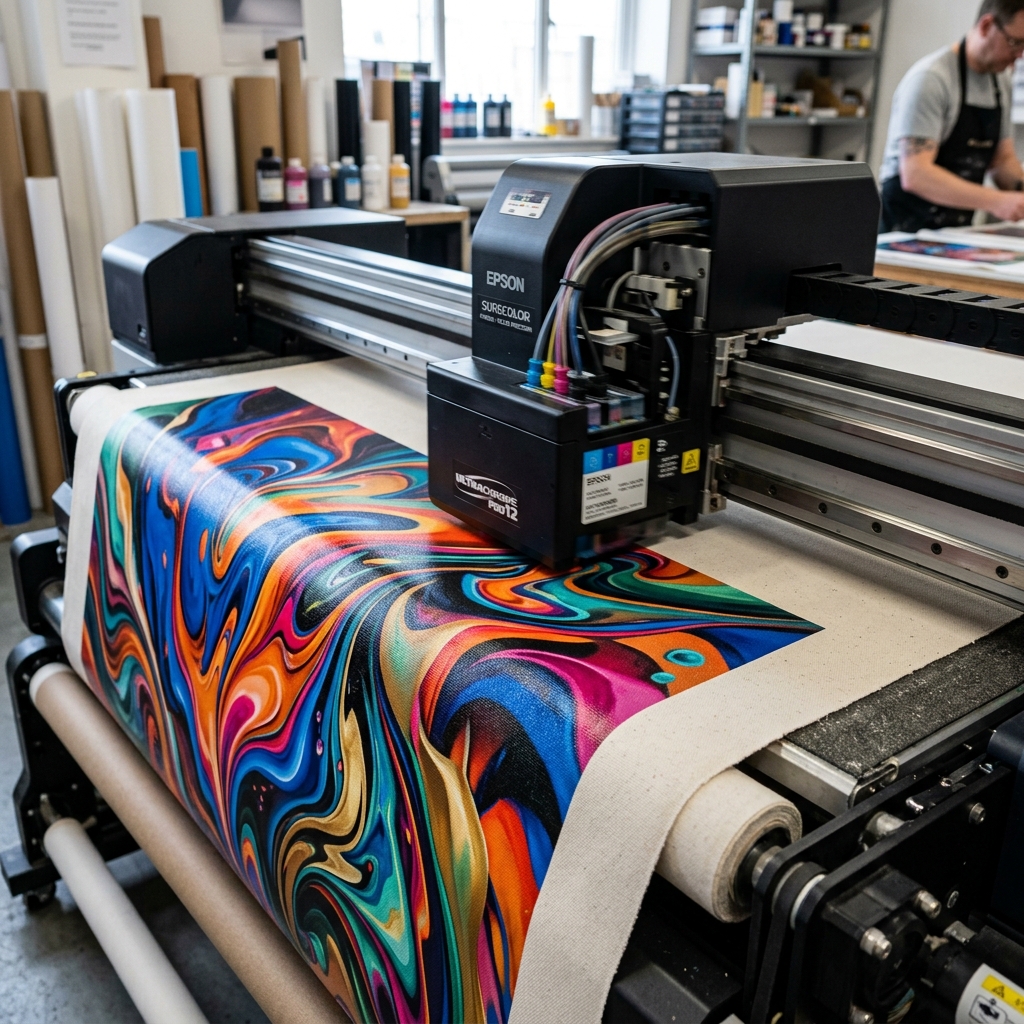
The final step is the translation from screen to physical object. This is where many digital artists stumble, but for me, it is a crucial part of the process. A beautiful image on a glowing screen does not automatically translate to a beautiful print. I work with high-quality giclee printers, experimenting with different papers and canvases to find the right texture and color response. Color management is a nightmare; what looks good on a monitor can look flat and dull on paper. I spend hours calibrating my equipment and doing test prints to ensure the colors are as vibrant and deep as I intended. The physical presence of the print, its scale, and its texture are all part of the artwork. I often hand-embellish the prints with paint or varnish to add depth and a unique physical character, bridging the gap between the digital and physical worlds.
This process challenges the popular notion that AI art is 'easy' or requires no skill. It requires a deep understanding of both digital tools and traditional artistic principles. It is a new kind of craftsmanship, where the medium is not paint or clay, but information, algorithms, and digital manipulation. I am proud to be an AI artist, and I believe this process is just as valid, and just as demanding, as any traditional art form. We are not replacing artists; we are inventing a new kind of artist.
The reception of my work in traditional galleries has been a roller coaster. Some curators are excited by the new frontier, seeing the potential for a new art movement. Others are dismissive, refusing to even consider the work because of the involvement of AI. But I believe the art speaks for itself. When people stand in front of a large, high-fidelity print and feel the emotion and complexity of the image, the question of how it was made becomes secondary. The process matters to me, but the impact matters to the viewer.