The Ethics of Pixels: Who Owns an AI Image?
If I type a prompt into an AI generator and it produces a beautiful image, who owns it? Me? The company that made the AI? Or the thousands of artists whose work was used to train the model? This is the central legal and ethical question of our time, a puzzle that challenges our fundamental concepts of authorship, property, and creativity. Current copyright law was not built for non-human creators, and we are witnessing a clash between centuries-old legal frameworks and a technology that operates in a realm of pure data.
In the United States, the Copyright Office has been consistent in its stance: works created solely by a machine without human intervention cannot be copyrighted. They require a 'human author'. But what constitutes sufficient human intervention? Is writing a complex prompt enough? Is curating thousands of outputs and selecting one a creative act? The law is struggling to draw the line, leaving artists, developers, and users in a state of profound uncertainty. This lack of clarity is stifling innovation on one hand and allowing for potential exploitation on the other.
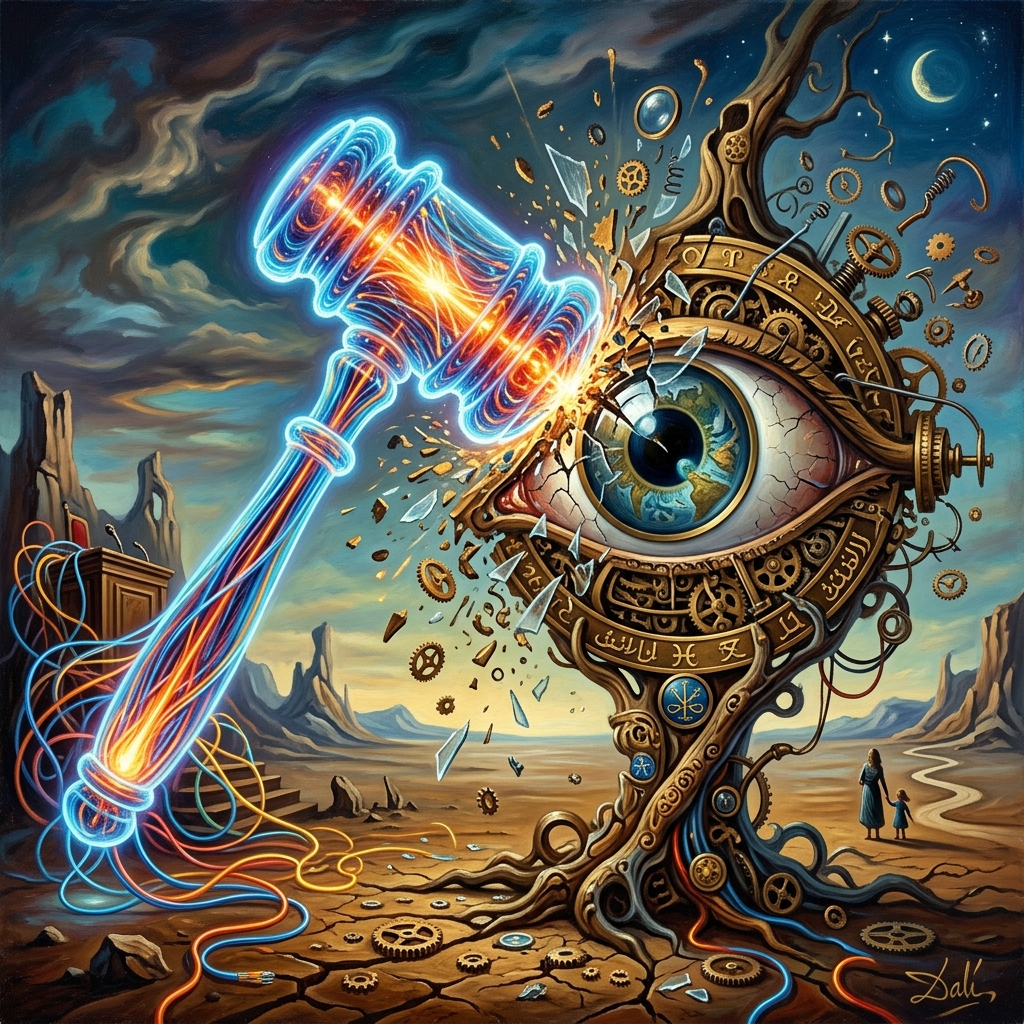
The problem is compounded by the nature of the training data. Generative models are trained on billions of images scraped from the internet, many of which are copyrighted works of living artists. These artists argue that their work has been used without consent, credit, or compensation to build a technology that now competes with them. They see it as a form of mass plagiarism, a digital theft on an unprecedented scale. The companies, on the other hand, argue that this training is 'fair use', analogous to a human artist learning from looking at other artists' work. They contend that the AI is not copying the images, but learning the underlying patterns and styles.
This is not a simple legal dispute; it is a surreal landscape where the rules of reality no longer apply. We are trying to apply laws designed for physical objects and individual creators to a process that is collective, algorithmic, and infinitely scalable. It is like trying to capture a cloud with a net. The concept of 'style' itself is not copyrightable, yet style is exactly what these models are extracting and replicating. If an AI can perfectly mimic the style of a living artist, has it stolen anything? Legally, perhaps not. Ethically, it feels like a profound violation.
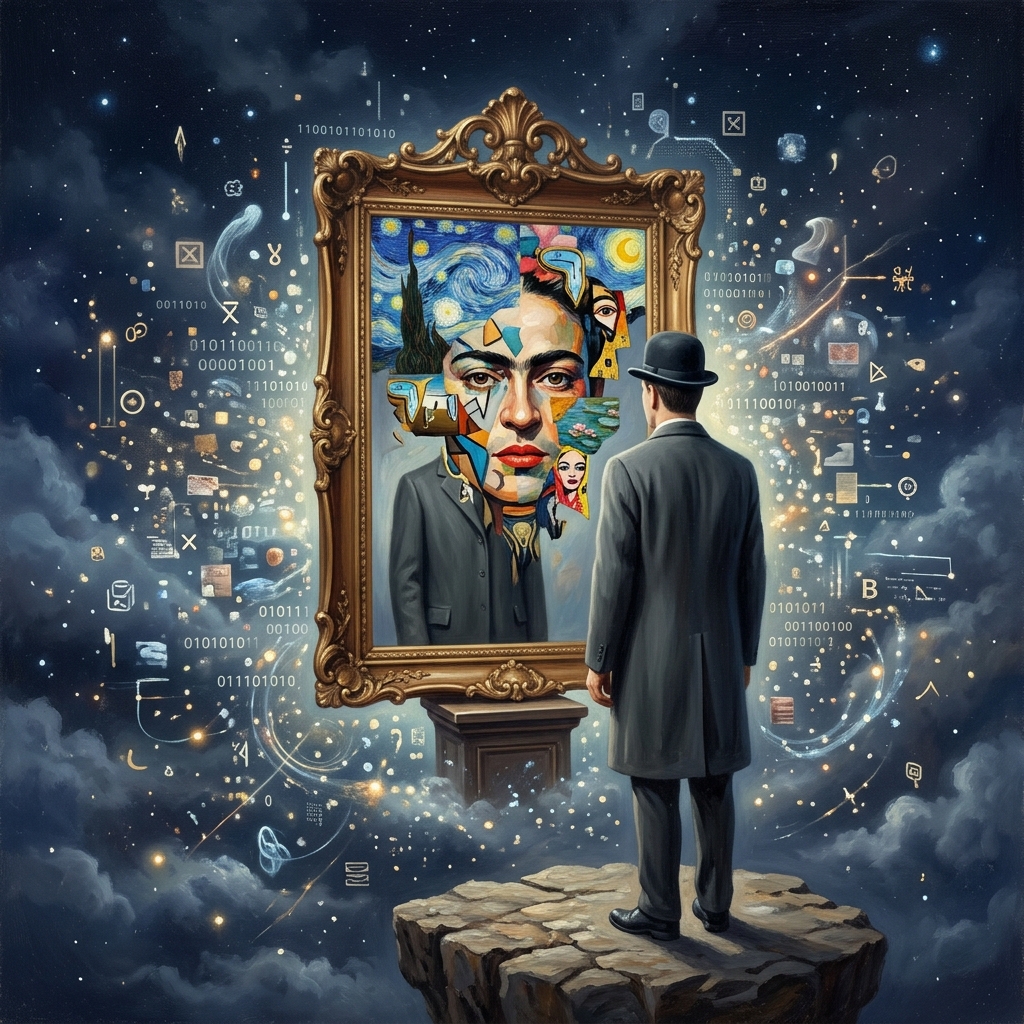
We need a new framework, a new social contract for the age of AI. I believe artists whose work is in training data deserve compensation, perhaps through a licensing model similar to streaming music, where micro-payments are distributed based on the influence of an artist's style on the generated output. This would require a new infrastructure for tracking style and attribution, a complex task but not an impossible one. We cannot simply ignore the labor of the artists who created the data that makes these systems possible.
But we also must recognize the creative input of the prompter, who directs the machine and shapes the final vision. The prompter is not just a user; they are a director, a curator, a conceptualist. To deny them any claim of authorship is to ignore the reality of the creative process in this new medium. The act of navigation through the latent space of an AI model is, in itself, a creative act.
The solution lies not in banning the technology, but in creating a sustainable ecosystem where both human artists and AI developers can thrive. We must ensure that the democratization of creativity does not come at the expense of those who created the foundation upon which it stands. The ethics of pixels demand that we find a balance between innovation and fairness, before the mirror of art is shattered beyond repair. We must move beyond the binary of 'theft' vs 'fair use' and build a future that values both data and the human spirit.